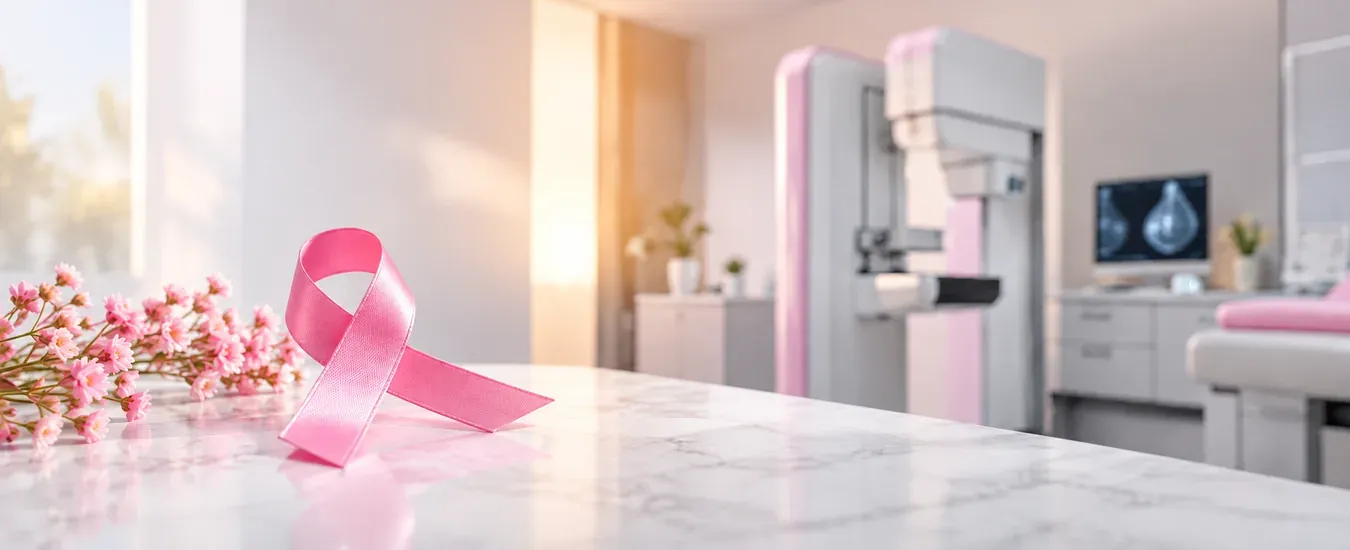
Breast Cancer Awareness: Why Early Detection Matters
Overview
Every October, pink ribbons appear on storefronts, social feeds, and in hospital lobbies, and for a few weeks, breast health is hard to ignore. Cancer, however, does not follow a calendar.
This guide is meant to be used long after October ends. It covers why awareness matters throughout the year, ten practical steps you can start now, how to examine your own breasts, when a change needs a doctor’s attention, and what UAE screening guidelines currently recommend.
Why Is Breast Cancer Awareness Important All Year Round?
Breast Cancer Awareness Month is an international health campaign held every October, giving healthcare providers a shared moment to talk about screening. Across the UAE, hospitals and clinics use the month to offer breast examinations and promote screening appointments. While the month is a useful reminder, it is a starting point, not the full picture. Breast cancer is the most common cancer among women in the UAE, which is why awareness cannot be seasonal:
- Stage at diagnosis shapes outcomes. Cancers found early are generally smaller, easier to treat, and associated with considerably better survival. A screening mammogram can detect changes years before anything can be felt.
- Risk is ongoing. Age, hormones, lifestyle, and genetics all act over decades, so protective habits and monitoring have to continue as well.
- Screening works best when it is routine. A single check-up has limited value. A consistent pattern of screening is what allows a clinician to compare images over time and notice subtle changes.
Common Breast Cancer Myths and Facts
Misinformation often causes unnecessary anxiety or leads people to delay screening appointments. Here are some facts behind common misconceptions:
Myth #1: If no one in your family has breast cancer, you will not get it.
Fact: Around 80% of breast cancer diagnoses occur in women with no family history, making regular screening essential for everyone.
Myth #2: A breast lump is always cancer.
Fact: Most breast lumps turn out to be harmless fluid-filled cysts or benign fibroadenomas, though every new lump still requires clinical evaluation.
Myth #3: Breast cancer only affects older women.
Fact: Risk increases with age, but breast cancer frequently occurs in younger women, with diagnoses in the UAE often happening earlier than global averages.
Myth #4: Breast cancer always causes pain or an obvious lump.
Fact: Early-stage breast cancer is usually painless and often imperceptible to touch, which is why imaging catches what self-exams miss.
Myth #5: Mammograms expose your body to dangerous levels of radiation.
Fact: The radiation dose from a digital mammogram is extremely low, roughly equal to a few weeks of natural background radiation from the environment.
Myth #6: A normal mammogram means you can skip screening for the next few years.
Fact: A scan only reflects your tissue health on that single day, so sticking to the standard two-year UAE screening schedule is vital to catch new changes.
Myth #7: Using antiperspirants or wearing underwire bras causes breast cancer.
Fact: Thorough medical studies have found no scientific link between underarm hygiene products, bra styles, and breast cancer.
Myth #8: Having dense breast tissue means you will definitely develop cancer.
Fact: Dense tissue is common and normal, though doctors often pair a mammogram with an ultrasound because dense areas can make scans harder to interpret.
Myth #9: Men cannot get breast cancer.
Fact: Men have breast tissue and account for about 1% of all cases globally, meaning any persistent chest lump or nipple change still requires medical assessment.
How to Perform a Breast Self-Examination at Home
A self-examination does not replace a mammogram or a clinical exam, but it helps you notice changes between appointments. The best time is a few days after your period ends, when breasts are least tender. If you no longer menstruate, choose the same date each month.
In front of a mirror
- Stand with your arms relaxed, then raise them overhead.
- Look for changes in size, shape, or symmetry, skin dimpling or puckering, redness, scaling, or a nipple that has turned inward.
Lying down
- Place a pillow under your right shoulder and raise your right arm behind your head.
- Using the pads of the three middle fingers of your left hand, make small circular motions, applying light, medium, and then firm pressure.
- Cover the whole area, from the collarbone to the bra line and from the armpit to the breastbone. Many women find a vertical, up-and-down pattern helps them avoid missing a section.
- Repeat on the other side.
In the shower
- Wet, soapy skin makes it easier for fingers to glide. Repeat the same pattern with your arm raised.
Finally, gently squeeze each nipple and note any discharge. If you find anything unusual, do not wait for your next scheduled check-up.
10 Actionable Steps to Take Charge of Your Breast Health
In an attempt to take charge of your breast health, here are 10 actionable steps to take:
1. Know your family history:
Ask relatives about breast, ovarian, prostate, and pancreatic cancers on both sides of the family. Write it down and share it with your doctor.
2. Understand your personal risk:
Early menstruation, late menopause, dense breast tissue, previous breast biopsies, and prior chest radiation can all affect your risk profile. A physician can help you put these in context.
3. Practise monthly breast self-awareness:
Learn how your breasts normally look and feel so that a change stands out. The steps are set out below.
4. Book a clinical breast examination:
A trained clinician can detect changes you might miss, and the appointment is also a chance to ask questions in private.
5. Begin mammography on time:
For women at average risk, UAE guidance advises starting at 40. Women at higher risk may need to begin earlier, so speak to a doctor around age 30 if there is a strong family history.
6. Maintain a healthy weight:
Excess body weight, particularly after menopause, is associated with a higher risk of breast cancer.
7. Stay physically active:
Regular exercise, roughly 150 minutes of moderate activity a week, is linked to a lower risk and supports overall health.
8. Limit alcohol and avoid tobacco:
Risk rises with the amount of alcohol consumed, and smoking adds further harm.
9. Discuss hormone therapy carefully:
If you are considering menopausal hormone therapy or long-term hormonal contraception, ask your doctor to weigh the benefits against your individual risk.
10. Consider genetic counselling if your history warrants it:
Inherited variations in genes such as BRCA1 and BRCA2 significantly raise risk. Testing is not for everyone, but a counsellor can advise whether it is appropriate for you.
When Should You See a Doctor About Breast Changes?
Most breast changes turn out to be benign, but only an examination can confirm that. Book an appointment promptly if you notice:
- A new lump or thickened area in the breast or armpit
- A change in the size or shape of a breast
- Dimpling, puckering or an “orange-peel” texture of the skin
- Redness, scaling or rash on the breast or nipple
- A nipple that turns inward or changes direction
- Nipple discharge, especially if it is bloody or occurs without squeezing
- Persistent pain in one specific area that does not settle
Aim to be seen within a couple of weeks. A short delay is understandable, but an extended one should be avoided. A physical examination is usually followed by imaging, typically an ultrasound for younger women or a mammogram for those over 40, and a biopsy if anything looks uncertain.
What are ways to prevent breast cancer?
No approach guarantees prevention, but these habits lower risk:
- Maintain a healthy weight.
- Exercise regularly.
- Limit alcohol and avoid smoking.
- Breastfeed where possible, if you have children.
- Review long-term hormone therapy with your doctor, and attend regular screening so any cancer is caught early.
Breast Cancer Screening Guidelines in the UAE
Screening recommendations in the UAE are set by the health authority in each emirate, and they are broadly aligned:
- Dubai (DHA): Women aged 40 and over are advised to have a mammogram every two years under the Dubai Periodic Health Screening Guideline.
- Abu Dhabi (DoH and ADPHC): Average-risk women aged 40 to 75 are advised to have a mammogram every two years, with a higher-intensity pathway for women at increased risk.
- Northern Emirates (MOHAP): The Ministry has published a National Guideline for Breast Cancer Screening and Diagnosis, which includes risk-based pathways.
Women at higher risk, such as those with a strong family history or a known genetic variation, may be advised to start earlier, screen annually, or have an MRI in addition to a mammogram. Some physicians also recommend annual mammograms from age 40 based on individual circumstances, so the right interval is best decided with your doctor.
FAQs
Why Is Breast Cancer Awareness Important Throughout the Year?
What Are the Early Warning Signs of Breast Cancer?
How Often Should You Get a Mammogram and From What Age?
Can You Develop Breast Cancer Without a Family History?
Does Every Breast Lump Mean Cancer?
References:
- Al-Shamsi, H. O., Abdelwahed, N., Abyad, A., et al. (2023a). Breast Cancer in the Arabian Gulf Countries. Cancers, 15, 5398. Cited by: 31
- Al-Shamsi, H. O., Abdelwahed, N., Al-Awadhi, A., et al. (2023b). Breast Cancer in the United Arab Emirates. JCO Global Oncology. Cited by: 38
- Di Maria, S., van Nijnatten, T. J. A., Jeukens, C. R. L. P. N., et al. (2024). Understanding the risk of ionizing radiation in breast imaging: Concepts and quantities, clinical importance, and future directions. European Journal of Radiology, 181, 111784. Cited by: 25
- Haber, G., Ahmed, N. U., & Pekovic, V. (2012). Family History of Cancer and Its Association With Breast Cancer Risk Perception and Repeat Mammography. American Journal of Public Health, 102, 2322–2329. Cited by: 145
- Rainey, L., Eriksson, M., Trinh, T., et al. (2020). The impact of alcohol consumption and physical activity on breast cancer: The role of breast cancer risk. International Journal of Cancer, 147, 931–939. Cited by: 42
- Sohi, I., Rehm, J., Saab, M., et al. (2024). Alcoholic beverage consumption and female breast cancer risk: A systematic review and meta-analysis of prospective cohort studies. Alcohol, Clinical and Experimental Research, 48, 2222–2241. Cited by: 65
Need to consult a specialist?